---
title: "BESS Safety Starts at the Design Stage: Why Early Risk Assessment Matters"
description: BESS safety starts at the design stage. Learn how early risk assessments, HAZID, HAZOP and consequence modelling reduce battery energy storage risks.
image: https://blog.safetysolutions.co.nz/hubfs/BESS%20Safety%20Starts%20at%20the%20design%20stage%20(1).jpg
---
- [My Account](https://www.safetysolutions.com.au/my-account/)
- Country
- [New Zealand](https://www.safetysolutions.co.nz/)
- [Australia](https://www.safetysolutions.com.au/)
- [Global](https://www.safetysolutions.co.nz/)
[](https://www.safetysolutions.com.au/)
- [Training](https://www.safetysolutions.co.nz/training/)
- Services
- [Consulting](https://www.safetysolutions.co.nz/consulting/)
- [Engineering](https://www.safetysolutions.co.nz/engineering/)
- [MHF Support](https://www.safetysolutions.co.nz/mhf-support/)
- [Resources](https://www.safetysolutions.co.nz/resources/)
- [E-Learning](https://www.safetysolutions.co.nz/E-learning/)
- [Blog](https://blog.safetysolutions.co.nz/)
- [About](https://www.safetysolutions.co.nz/about/)
- [Contact](https://www.safetysolutions.co.nz/contact/)
- [My Account](https://www.safetysolutions.com.au/my-account/)
- Country
- [New Zealand](https://www.safetysolutions.co.nz/)
- [Australia](https://www.safetysolutions.com.au/)
- [Global](https://www.safetysolutions.co.nz/)
# Process Safety Blog
# BESS Safety Starts at the Design Stage: Why Early Risk Assessment Matters
[Ross Benton](https://blog.safetysolutions.co.nz/author/ross-benton)
Aug 18, 2026, 3:40:52 PM
Battery Energy Storage Systems (BESS) are rapidly becoming a critical part of the energy transition. As renewable generation continues to grow, energy storage plays an increasingly important role in ensuring grid stability, managing peak demand and improving energy reliability.
Alongside this growth has come greater awareness of the hazards associated with BESS installations. Industry attention has largely focused on thermal runaway events, battery fires and the challenges faced by emergency responders when incidents occur. While these discussions are important, they often focus on managing consequences after a facility has already been designed and constructed.
The reality is that many of the most effective safety controls available to a BESS project are established long before the first battery container arrives on site. Decisions made during concept selection, layout development and detailed design can have a significant influence on the overall risk profile of the facility throughout its operating life.
For developers, owners and operators, this raises an important question:
*Are we identifying and managing BESS risks early enough in the project lifecycle?*
### **Understanding the Risks Associated with BESS**
Modern BESS installations offer significant benefits, but they also introduce hazards that differ from many traditional electrical systems.
One of the most widely discussed hazards is thermal runaway, where a battery cell undergoes an uncontrolled increase in temperature. Once initiated, thermal runaway can generate intense heat and lead to the release of flammable and toxic gases.
Depending on the battery chemistry, design and environmental conditions, this can potentially result in:
While improvements in battery technology, management systems and fire protection continue to enhance safety, the potential consequences of a loss of control event can still be significant. Understanding these hazards is the first step in developing a safer facility.
### **The Design Trap**
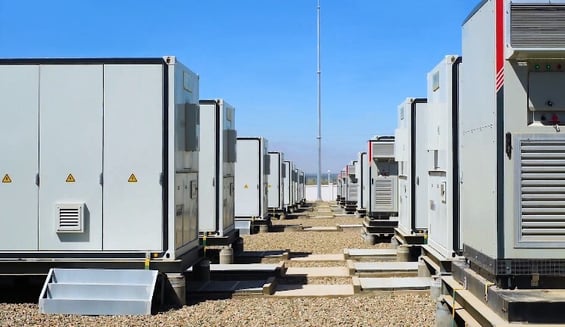
Many BESS projects unintentionally fall into what could be described as the "design trap", whereby key risk decisions become effectively locked in before formal risk assessment is undertaken. Some examples include:
Once equipment has been procured, foundations constructed and layouts approved, opportunities for meaningful risk reduction become more limited and significantly more expensive.
| #### [**.jpg?width=290&height=218&name=Safety%20in%20Design%20course%20-%20white%204x3%20(1).jpg)**](https://www.safetysolutions.co.nz/product/safety-in-design/) | [.jpg?width=290&height=218&name=Demonstrating%20SFARP%20course%20-%20AUS%20-%20white%204x3%20(1).jpg)](https://www.safetysolutions.com.au/product/demonstrating-sfarp-training/) | [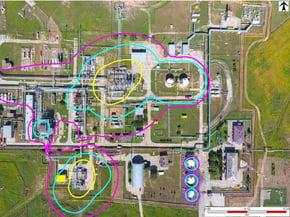](https://www.safetysolutions.co.nz/consulting/engineering-services/consequence-modelling/) |
| --- | --- | --- |
| This online [Safety in Design Training Course](https://www.safetysolutions.co.nz/product/safety-in-design/) is to train the course participants to actively participate in SiD workshops. | Find out about our upcoming [Demonstrating SFARP/SFAIRP Training Course](https://www.safetysolutions.co.nz/product/demonstrating-sfairp-training/) | [Safety Solutions can model your fire, explosion, and toxic release events with](https://www.safetysolutions.co.nz/product/safety-in-design/)[Consequence Modelling.](https://www.safetysolutions.co.nz/consulting/engineering-services/consequence-modelling/) |
### **Why Early Risk Assessment Delivers More Value**
The greatest opportunity to influence safety often exists during the design stages of project development.
This is where structured risk studies can provide valuable insights into hazards, failure scenarios and potential control measures before major design decisions become fixed. An effective risk management program may include:
##### **HAZID**
Hazard Identification (HAZID) workshops provide a structured process for identifying credible hazards associated with a proposed BESS facility, including electrical, operational, emergency response risks as well as the broader site hazards.
##### **Electrical HAZOP**
Electrical HAZOP studies examine how deviations from intended operation could occur and what consequences may result. These studies help teams identify weaknesses in protection systems, operating philosophies and design assumptions before installation.
##### **Bowtie Analysis**
Bowtie assessments provide a visual representation of how major unwanted events, such as thermal runaway, can occur and the preventative and mitigative controls in place to manage them.
This approach helps stakeholders understand not only what controls exist, but also why they are important.
##### **SFAIRP Assessments**
Demonstrating that risks have been reduced So Far As Is Reasonably Practicable (SFAIRP) is becoming increasingly important for major energy projects.
SFAIRP assessments provide a structured process for evaluating additional risk reduction measures and demonstrating that safety decisions have been appropriately considered and justified.
##### **Consequence Modelling: Turning "What If?" Into Quantifiable Outcomes**
One of the challenges when assessing BESS risk is understanding what an incident could actually look like.
This is where consequence modelling can provide significant value.
Consequence modelling uses recognised engineering methods and specialised software to predict the potential effects of hazardous events before they occur. Rather than relying solely on qualitative judgement, project teams can better understand the potential impact of specific incident scenarios.
For BESS facilities, consequence modelling may be used to assess:
The results can provide a much clearer understanding of potential consequences and support informed design decisions.
For example, a consequence modelling study may help answer questions such as:
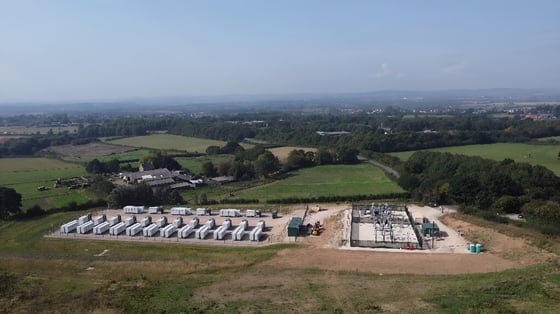
Rather than being viewed as a compliance exercise, consequence modelling can be a practical design tool that helps developers optimise facility layouts, strengthen risk controls and make more informed investment decisions.
### **Final Thoughts**
As BESS deployments continue to grow, so too will expectations around the identification and management of risk.
While battery technologies, detection systems and protection measures continue to evolve, one principle remains consistent: the best opportunities to improve safety occur during design.
By incorporating structured hazard and risk assessments such as Electrical HAZID, Electrical HAZOP, Bowtie Analysis, consequence modelling and SFAIRP assessments early in the project lifecycle, developers and operators can make better-informed decisions when changes are still practical, effective and cost-efficient.
Because when it comes to BESS safety, the most valuable controls are often the ones designed in from the beginning.
##### **Ready to take your process safety strategy to the next level?**
[](https://blog.safetysolutions.co.nz/hs/cta/wi/redirect?encryptedPayload=AVxigLLC2QD3A9H9ERTltnSfL9%2F190INd1hh4sSN9BeOV3zbfk7P8yzTyc7dotCIbunRncol%2FMggYtcBuxU7keF2IRuS0zQ1kBDhnJ2WgIUjCxCoiVCf%2F7kxyaeg%2FfCi5G4BW9%2FGFPSP2%2BNwqVhjNqGHgDxbq3CxQdfShnWNeQPbeHPaAByVDJLh2jT1u40zf6sequQuKuG6YT7R0n47Ij4F&webInteractiveContentId=374053084653&portalId=2135719&hsLang=en-nz)
[](https://blog.safetysolutions.co.nz/hs/cta/wi/redirect?encryptedPayload=AVxigLL9yH3tMXvHjXXR56GVtw%2BKrxUNy%2FNBrboPdhPCxQSm80sUDOyM7wjE0yY02s%2Fb2JiFOo2nOTLyNUo6i1ZtfyyFJ5aD4YvpLxY9s1RMqwQEtc%2Fukxfw5LFtpUMOD5OoBBxJpPZvIt7IqE9GddJadP7BNe9YStvR6xjzkT9SIVGRN9wHAW90rzyr2h48O6FZmtVakUW6JmEcp7vdfYF3eLwNwzec%2B%2Fjm43R84Js%2BqzQvlB5roEK2%2Bgo7aYc%3D&webInteractiveContentId=379418627533&portalId=2135719&hsLang=en-nz)
[Consequence Modelling](https://blog.safetysolutions.co.nz/tag/consequence-modelling), [Safety in Design](https://blog.safetysolutions.co.nz/tag/safety-in-design), [Hazard Identification](https://blog.safetysolutions.co.nz/tag/hazard-identification), [Renewable Energy](https://blog.safetysolutions.co.nz/tag/renewable-energy)
## Read On
### [Revalidation Is Not Renewal: Ensuring Process Safety Studies Reflect Current Facility Risks HAZOPs, Bowties, LOPAs, and SFAIRP Assessments are often treated as finished products. In...](https://blog.safetysolutions.co.nz/revalidation-is-not-renewal-ensuring-process-safety-studies-reflect-current-facility-risks?hsLang=en-nz)
### [Why Organisations Fail to Budget for SFAIRP Throughout an Australasian operating facility’s life, it is required to have its risks in a SFARP /...](https://blog.safetysolutions.co.nz/why-organisations-fail-to-budget-for-sfairp?hsLang=en-nz)
### [Should Process Safety Practitioners be Independent? In operating environments, we constantly are trying to balance several goals which often can be in...](https://blog.safetysolutions.co.nz/should-process-safety-practitioners-be-independent-1?hsLang=en-nz)
Copyright 2020 Safety Solutions | [Terms and Conditions](https://www.safetysolutions.com.au/terms-and-conditions/) | [Privacy Policy](https://www.safetysolutions.com.au/privacy-policy/)